
The 46th National Narrow Gauge Convention will offer registered attendees the opportunity to participate in Operating Sessions on multiple home layouts that are located both on the way to and from our convention as well as locally during the convention. Many of these layouts have not only been featured in national model railroad magazines but also have participated in operating session events such as ProRail. If you are already interested in operations or you are looking to learn more about operations, we hope you will take advantage of these opportunities at our convention!
Note: Opportunities to participate in our Operating Sessions are limited. Interested persons will be accommodated on a first come, first served basis. Latecomers after July 15th will automatically be placed on a waiting list and will be notified if an opportunity becomes available.
What is an Operating Session?
An operating session is where the layout host provides participants the opportunity to take on a specific role in operating their layout in a fashion that simulates the experience of actually working on the railroad. As on a real railroad, dispatchers, engineers, conductors and brakemen all perform various tasks in order to move people and freight in a realistic manner across the railroad. Each layout host utilizes a ‘system’ to coordinate and control train movements across their layout in a manner that reflects the actual operation of their railroad. Typical systems include; Timetable & Train Order (TT&TO), Car Cards & Waybills and Switch Lists. Operators of all experience levels are welcome!
Information About Our Operating Sessions and Schedule
As home layout operating sessions are added, basic layout information will be displayed on this page. A typical operating session can last 2 – 4 hours and individual participation may be limited as you desire. Detailed information including the maximum number of participants, the length of the session and how to register for a session, the operating session schedules and participating layout specific details will be available to registered attendees prior to the convention in WHOVA™.
Operating Sessions Hosted Before The Convention
Thunder Bay, Canada
For those traveling from the north to our convention, we have the following inspirational home layouts that are offering operating sessions and layout tours on the Monday and Tuesday right before our convention. If you would like to participate in these operating sessions, it would be best if you planned to stay overnight in Thunder Bay.
If you haven’t registered yet and are interested in either participating in these operating sessions or just viewing these layouts, be sure to indicate your interest by selecting the ‘before the convention’ option on the operating session question during your registration process. If you’ve already registered, didn’t answer this question and are now interested, please reach out to the convention committee via the general email contact on our website and let them know of your interest. There are a limited number of spots for this opportunity, so please sign up soon!
CN Rail Caramat Subdivision
Scale: HO
Era/Locale: Northwestern Ontario, Canada in the mid 1990s
Maximum number of operators supported: 6
This large double decker layout captures mainline railroading in the mid 1990’s. This 100% photo complete layout represents a portion of the Canadian National Railway transconental Route, focusing on the Caramat Subdivision in Northwestern Ontario Canada. The layout is built for operations, with operational CTC, a dispatcher and radio communications.
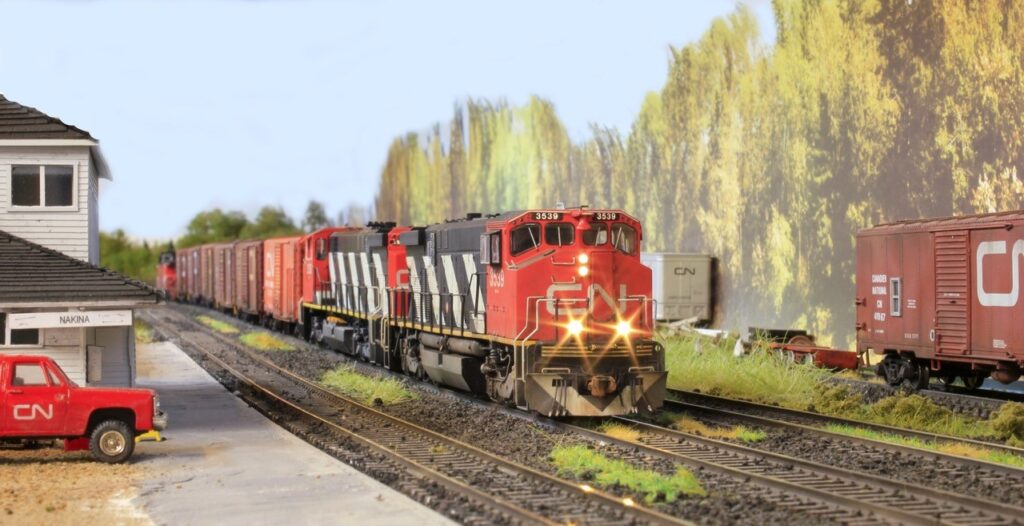
See more photos and details on the CN Rail Caramat Subdivision.
Rio Grande Southern – First District
Scale: HOn3
Era/Locale: 1942 Ridgway to Rico, Southwest Colorado
Maximum number of operators supported: 8
You’ve seen this layout evolve for the past 15 years in the pages of the Narrow Gauge & ShortLine Gazette. Here’s your chance to see this Gazette columnist’s double decked layout which faithfully replicates the key towns between Ridgway and Rico, Colorado and also includes the Telluride branch to Pandora, Colorado. The layout is designed for operation and features a point-to-point design with trains running through each scene only once along its 200 foot mainline. The layout also features a high ratio of scenery to train which creates the feeling of being at the throttle of a goose or worn out tea kettle as it travels through the vastness of the San Juan Mountains.
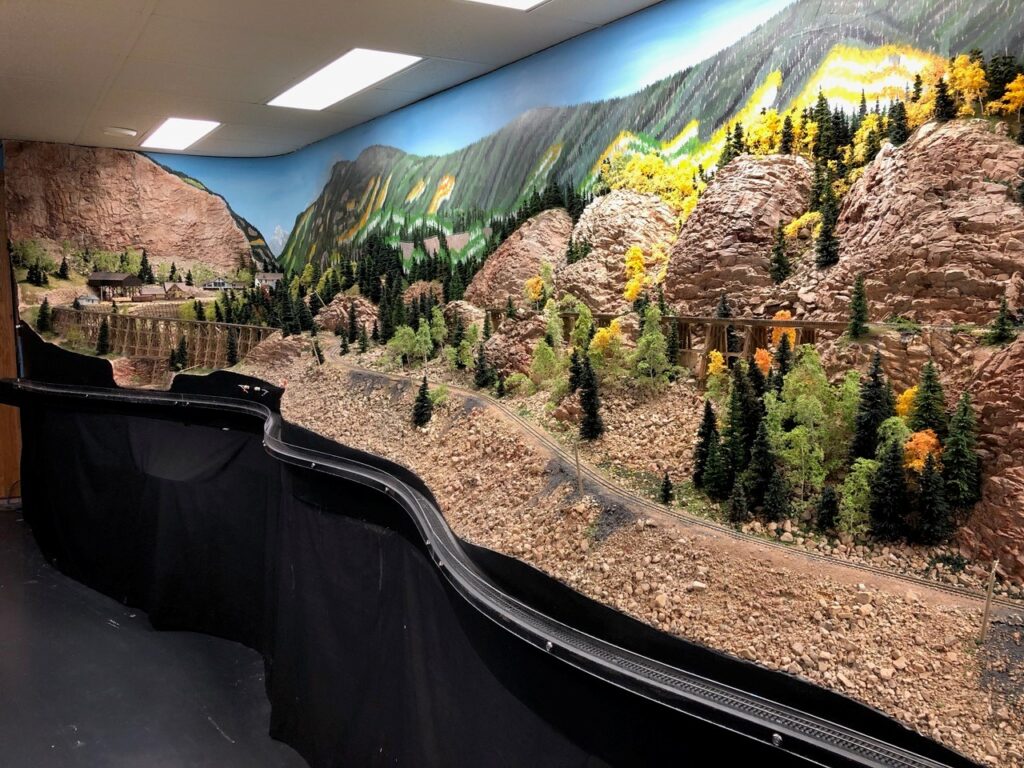
See more photos and details on the Rio Grande Southern – First District.
Bloomington, Minnesota
Yes, right close to the convention hotel!
RGS, Ridgway to Dolores
Scale: HOn3
Era/Locale: Late 1930s – Early 1940s Ridgway to Dolores, Southwest Colorado
Maximum number of operators supported: 4-5
This layout includes some of the key towns located along the RGS between Ridgway and Dolores, Colorado. It also includes an extensive freelance logging operation typical in the western part of the country. The layout is designed for operation and features a point-to-point design with trains running around the 125-foot mainline. The layout was designed to operate running trains south from Ridgway and north from Dolores while running locals into the freelance logging community of Deer Creek. The layout offers single track mainline operation with train meets and plenty of switching action around the layout.
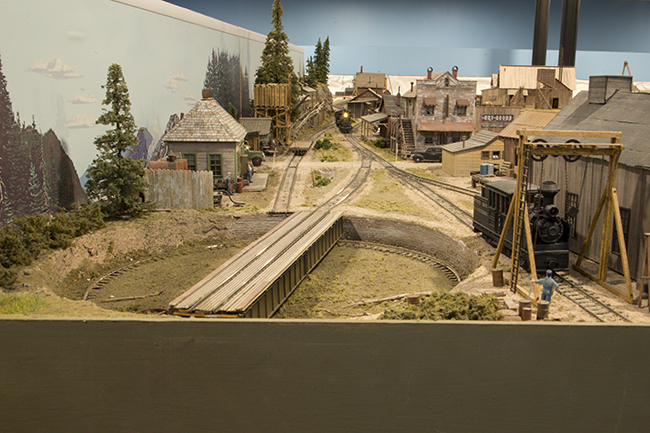
See more photos and details on the RGS Ridgway to Dolores.
Operating Sessions Hosted During The Convention
Twin Cities, Minnesota
CB&Q
Scale: HO
Era/Locale: 1969 Southwestern Wisconsin
Maximum number of operators supported: 8
Set in late 1970, a few months after the Burlington Northern merger, this 1000 square foot layout is based on the area along the Mississippi River between East Dubuque, Illinois and La Crosse, Wisconsin. Staging tracks represent lines east and west. The 200 foot mainline is mostly double track, except for two single track sections, crossing the Wisconsin River south of Prairie DuChien and La Crosse.
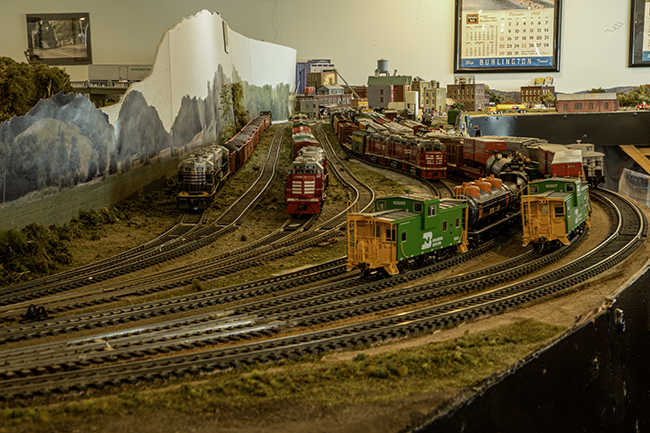
See more photos and details on the CB&Q River Division.
Minnesota Heartland Centralsota
Scale: S
Era/Locale: Twin Cities, Minnesota
Maximum number of operators supported: 6
This large layout features two long routes that circle the basement which allows for long trains to run. Within this circle are four distinct railroad operations which include an active staging area, the 27th Ave industrial area, a downtown switching area which includes an interchange yard and Heartland Junction where the Minnesota Heartland leaves the main to work the small but busy prairie towns of Grey Eagle and Centralsoda. Operations are relaxed with each crew servicing its own town or business district using switchlists to guide them.
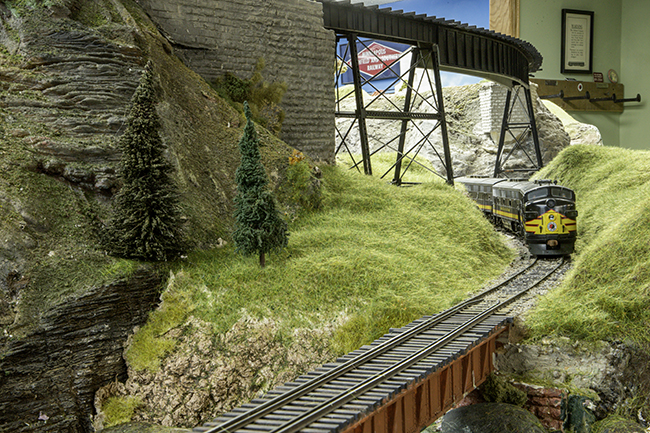
See more photos and details on Minnesota Heartland Centralsota.
Operating Sessions Hosted After The Convention
Bloomington, Minnesota
Yes, right close to the convention hotel!
RGS, Ridgway to Dolores
Scale: HOn3
Era/Locale: Late 1930s – Early 1940s Ridgway to Dolores, Southwest Colorado
Maximum number of operators supported: 4-5
This layout includes some of the key towns located along the RGS between Ridgway and Dolores, Colorado. It also includes an extensive freelance logging operation typical in the western part of the country. The layout is designed for operation and features a point-to-point design with trains running around the 125-foot mainline. The layout was designed to operate running trains south from Ridgway and north from Dolores while running locals into the freelance logging community of Deer Creek. The layout offers single track mainline operation with train meets and plenty of switching action around the layout.
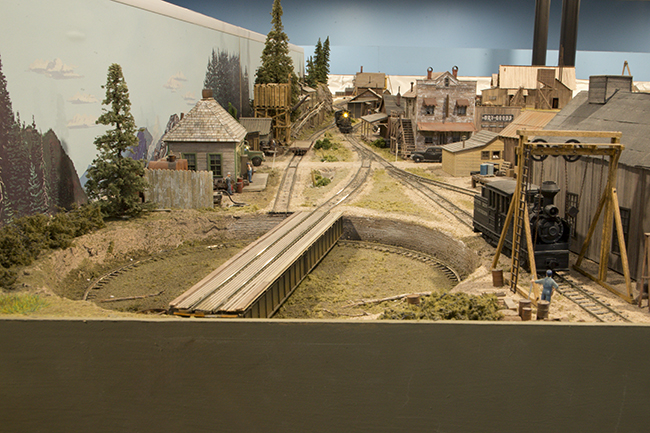
See more photos and details on the RGS Ridgway to Dolores.